

How to Sell a Property in Italy in 2026: Steps, Costs, Taxes
A practical guide to the steps, documents, fees, tax points, and common mistakes to avoid when selling a residential property in Italy.
If you are selling a residential property in Italy, you need to prepare the paperwork early, price the home against local comparables, and know which checks sit with the notary and which may need a qualified technician. You also need to keep the energy performance information ready for the advert and the sale, because the APE details must be shown and handed over when the property is sold. The exact tax position should be confirmed with a local professional where your facts are not clear.
Price the home
Price the home by comparing it with recently sold similar properties in your area and by looking at how long homes are taking to sell locally. Recent Italian market reporting shows that time on market varies a lot by place and segment, so a national average is not a reliable guide for your own asking price. You should also take account of the home’s condition, any visible differences from comparable homes, and whether the property is ready for sale in its paperwork and compliance status. If you price too high, you may extend the time to sale; if you price too low, you may leave value on the table. A practical pricing approach is to gather a small set of local comparables, then adjust for size, condition, location, and any issues that a buyer or notary is likely to spot.
Prepare the documents
Prepare the documents before the preliminary contract, not just for the final deed. You should already have the title deed, cadastral plan, previous building permits or urban-planning documents, and the agibilità where available, or proof that it was requested. The seller must also make the cadastral declaration in the deed and confirm that the cadastral data and plan match the property’s actual state; that declaration is required under penalty of nullity for the cadastral compliance statement. The APE is mandatory for an ordinary residential sale unless an exemption applies, and it should be made available to the buyer as required by current rules. In practice, it helps to check that your home exactly matches the records held by the municipality and land registry before you go to contract.
Check compliance
Check compliance before you go to the notary so that any mismatch is found early. The notary-council guidance says a technical urbanistic-cadastral report is optional, but it can be ordered before the rogito to check cadastral compliance, building permits, agibilità, and constructive tolerances. When used, it is prepared by a qualified technician such as an engineer, architect, or surveyor. This can help you make the declarations required in the deed with more confidence because it compares the property’s factual state with cadastral and urban-planning records. Urban-planning irregularities, mismatched plans, and unverified permits are among the common problems that can lead to disputes after the deed, so it is better to resolve them before you list the home.
Choose who handles the sale
Choose the notary for the final deed, because the rogito is signed before a notary and the notary formalises the transfer. The notary must verify anti-money-laundering compliance and payment traceability; any agency commission terms should be checked in the signed mandate. If you use a separate technical report, that part is handled by a qualified technician, not by the notary. An ordinary seller may also use an agency, but the exact arrangement depends on the signed mandate. If there is no written mandate, the agency may not be able to prove the agreed fee, so keep every instruction and commission term in writing.
Know the agent commission
You will usually pay a commission if you sell through an agency, but the amount and who pays it depend on the contract you sign. The recent authoritative sources consulted do not give a single fixed national percentage, so you should check the mandate for the exact rate and the payment split. Under Italian law, the broker’s commission is generally due from the parties who used the broker’s services, unless the agreement provides otherwise. The key point for you is to read the written mandate before you instruct the agency and before the notary asks for commission details. If the wording is unclear, confirm it with a local professional.
Understand seller taxes
You may have to pay tax on a capital gain if the property was acquired or built less than five years before the sale, subject to the statutory exemptions; for certain energy-requalified homes, a different 10-year rule can apply. No taxable capital gain arises if the property was used as your own or your family members’ main residence for most of the period between purchase or construction and sale; inherited properties are also excluded from the standard five-year capital-gain rule. If the gain is taxable and you choose the substitute-tax option, the applicable rate is 26%. For immovable property acquired or built within five years, the taxable amount is the sale price minus the acquisition or construction cost plus related costs. The tax authority also shows a separate filing and payment path for the substitute tax, so you should align your sale paperwork with your tax filing position.
Plan the timeline
Plan for the period from the preliminary contract to the final deed to take about 2 to 6 months, although there is no statutory maximum if the parties agree otherwise. Recent market reporting also shows that actual selling times vary widely by area, with one source reporting an average of 108 days in major cities in January 2026. That spread is a reminder that the timing depends on location, pricing, condition, and how complete your documents are. For a smooth process, you should have the paperwork ready before the preliminary contract, fix any compliance issue early, and keep the buyer informed if a technician or notary needs more time. Where your case depends on local practice, confirm the likely timetable with the notary or agent.
FAQ
What documents do I need to sell a house in Italy?
You need the title deed, cadastral plan, previous building permits or urban-planning documents, and the agibilità where available or proof that it was requested; the APE is also required unless an exemption applies.
Who signs the final deed when I sell property in Italy?
The notary signs and formalises the final deed, while any separate technical compliance check can be done by a qualified technician such as an engineer, architect, or surveyor.
Do I have to pay agent commission when I sell in Italy?
Usually yes, if you sell through an agency, but the amount and who pays depend on the written mandate; without a written mandate, the agency has no right to claim a fee.
Will I pay capital gains tax when I sell my home in Italy?
You may pay tax if the property was acquired or built less than five years before the sale, unless an exemption applies, such as the main-residence rule for most of the holding period; for certain energy-requalified homes, a different 10-year rule can apply.
How long does it take to sell a house in Italy?
About 2 to 6 months is a common period from preliminary contract to final deed, but the actual selling time depends on the local market, price, condition, and how ready your documents are.
Find out what your property is worth
Get a free AI valuation in about a minute, then list your property once and reach buyers and brokers across the GREM network.
Get a free valuationOwn a property? For owners ↗
Property for sale in Italy
Live listings from the GREM catalogue — prices and areas as of today.
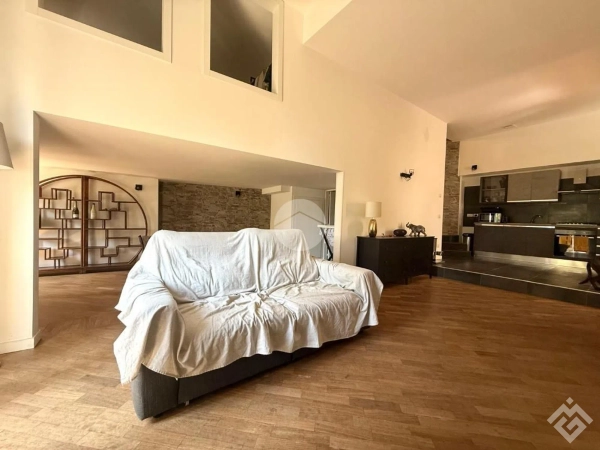 Apartment on Nicola Ricciardi Street, 5€404,875
 Apartment in Vico Lammatari, 46€91,225
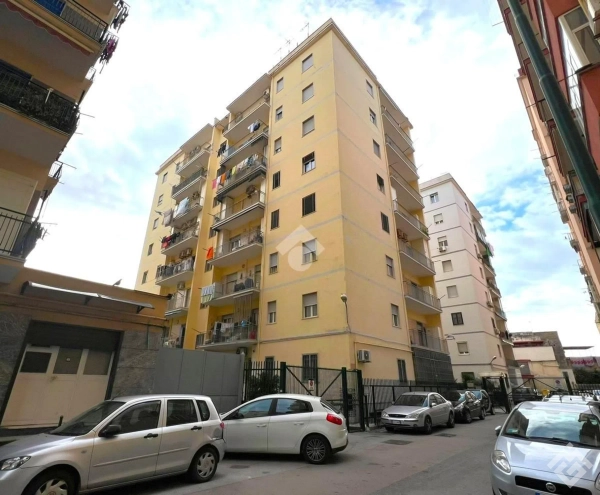 Apartment in i Traversa Bernardino Martirano, 5€174,250
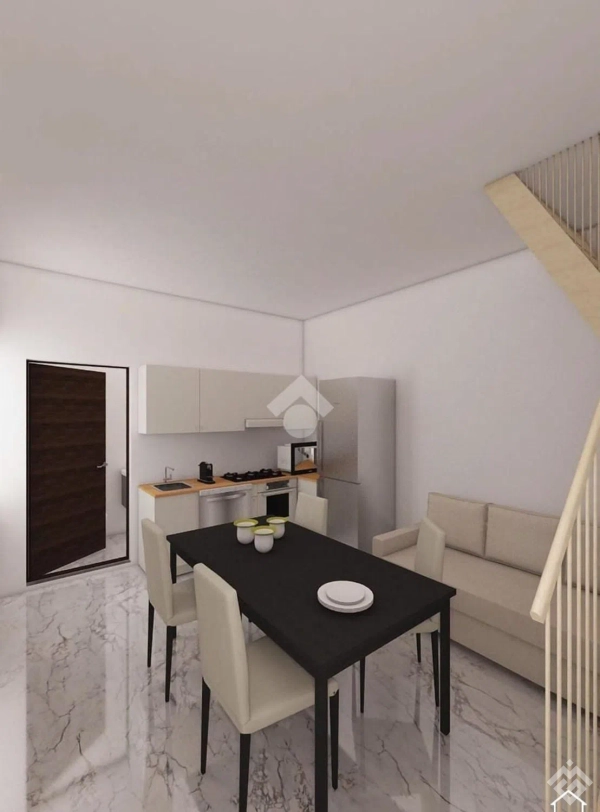 Apartment on Via Vincenzo Cilento, 55€56,375
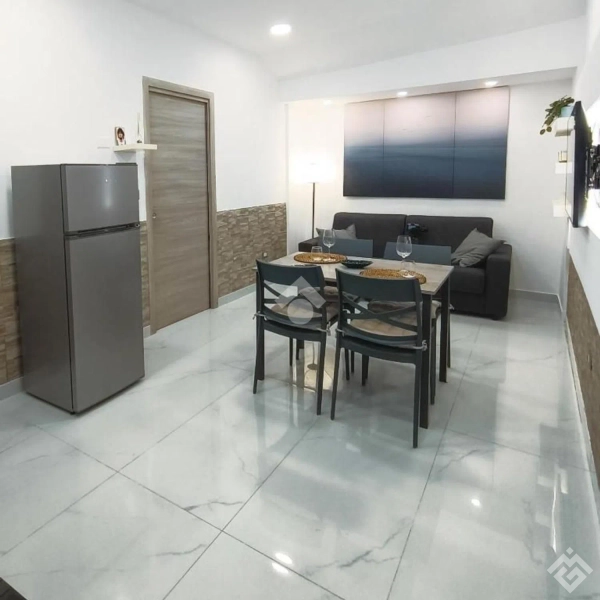 Apartment in Vico Cariati, 48€133,250
 Apartment on Comunale Napoli Street, 126€194,750