

How to Sell a Property in Thailand in 2026
You can prepare a Thai home sale by checking official value references, gathering the right papers, and planning for land-office taxes and registration.
If you are selling an ordinary residential property in Thailand, the practical work starts with pricing, documents, and the land-office transfer. You will usually rely on official value references, then complete the registration at the competent land office with the buyer or a representative. Tax and fee amounts are worked out from the Department of Lands appraised value, so it helps to check that figure before you agree a price.
Price the home
Price the home by checking both official and market references before you market it. The Department of Lands provides online services to check land appraisal values by plot or condominium, and the Bank of Thailand publishes a Residential Property Price Index based on mortgage loan data from commercial banks and specialised financial institutions. Those references help you estimate the likely land-office charges and see how your asking price compares with the wider market. Do not rely only on the contract price when you plan your net proceeds, because the official appraised value is used for some transfer-related tax calculations and may be used as the tax basis in certain cases. Confirm the exact pricing approach with a local property professional if your home has unusual features or a non-standard title.
Property for sale in Thailand
See all listings in Thailand →
Gather documents
You need the original title deed and the seller’s basic identity and registration papers for the transfer. The Department of Lands’ provincial guidance and service materials commonly list the ID card, household registration, name-change documents if any, spouse consent if any, building permit if any, and the title deed, and they require original documents for filing. The land-office transfer materials also indicate that the parties handle the transaction together at the land office, with common supporting papers including the parties’ ID cards, household registration, and the title deed. You should check every name and document detail before the appointment, because missing spouse consent or relying on copies can delay the transfer. If any document was issued abroad or there is a name change, ask a local professional to confirm the matching paperwork before you go.
Use the right transfer process
The transfer is completed at the competent land office, and the official there handles the registration after the parties lodge the documents. For an ordinary residential sale, the Department of Lands says the seller and buyer execute the transfer at the land office, so you should plan for both sides to attend or to use a valid representative. If a party cannot attend in person, Thai land-office procedures allow a written power of attorney for acts such as selling land, and the authority should be stated clearly and specifically in writing. The Department of Lands advises using its own form for convenience. A power of attorney made abroad should generally be certified by an embassy, consulate, or notary public acceptable to the land office, and you should confirm the required certification with the competent office before filing.
Check it with AI — free
Tools that work right away, without signing up.
Know who handles the legal steps
The land office handles the registration step, while you and the buyer supply the documents and sign the transfer. In practice, that means you and the buyer usually complete the transfer filing at the land office yourselves, or you use a valid representative. The Department of Lands’ transfer guidance shows that the official completes the registration after the parties submit the file, so the main seller task is to arrive with correct documents and any power of attorney if needed. If you appoint someone to act for you, make sure the authority is specific and backed by supporting identity documents, because the Department of Lands highlights transaction risk when the wording is unclear. For anything unusual, you should confirm the representation paperwork with a local professional.
Budget seller taxes and fees
You should budget for transfer-related charges that are based on the Department of Lands appraised value. The Department of Lands states that the property transfer registration fee for a sale is generally 2% of the appraised value. A temporary government measure reduced the transfer and mortgage registration fee to 0.01% for eligible residential transactions that meet the applicable conditions and the current deadline set by the government measure. Whether the reduced 0.01% rate applies depends on the official government conditions for the relevant residential transaction, so you need to check whether your deal qualifies. For tax, the Revenue Department says property-sale income for individuals can be subject to personal income tax withholding, special business tax, or stamp duty, depending on the facts of the transaction and whether an exemption applies. The Revenue Department’s property-sale guidance and calculators should be used to work out the applicable tax treatment and amount. Thailand’s official guidance also provides online calculators for these taxes.
Plan for non-resident and special cases
Tax treatment can depend on your Thai tax residency and, in some cases, the source and remittance of income, so you should check your wider tax position if you are living abroad or moving money back into Thailand. For a straightforward arm’s-length home sale, the normal seller rules still apply, but the Revenue Department’s property-sale guidance should be used to determine the tax basis where required, including transfers that are not at arm’s length or are without consideration. If there is no consideration, the Revenue Department may determine the sale price by reference to the official appraised value used for registration and juristic acts fees, subject to the exemptions and rules in the Revenue Department’s guidance. Because your residence status and transaction structure can change the tax result, you should confirm the treatment with a local tax professional before you sign.
Avoid common mistakes
The most common mistakes are planning only from the contract price, missing spouse consent, and turning up without original documents. Another error is assuming the transfer fee is always 2% without checking whether any current temporary reduced-rate measure applies to your transaction; as of the current government measure, eligible residential transfer and mortgage registrations may qualify for a 0.01% rate until 30 June 2027. You should also avoid vague powers of attorney, because the Department of Lands warns that unclear wording can create fraud risk. For tax planning, remember that the Revenue Department may use the official appraised value rather than the agreed sale price, so your net proceeds can be lower than you expect if you ignore that base. If your sale is unusual in any way, get local confirmation before completion.
FAQ
What documents do I need to sell a house in Thailand?
You usually need the original title deed, your ID card, your household registration, any name-change documents, spouse consent if applicable, and a building permit if applicable.
Who handles the property transfer in Thailand?
The land-office official handles the registration after you and the buyer lodge the documents at the competent land office.
How is the transfer fee calculated in Thailand?
The fee is generally 2% of the appraised value, although a temporary reduced rate of 0.01% currently applies to eligible residential transfer and mortgage registrations until 30 June 2027.
What taxes does the seller pay when selling property in Thailand?
The seller may face personal income tax withholding, special business tax, or stamp duty, depending on the transaction and whether any exemption applies.
Can I sell if I cannot attend the land office in person?
Yes, if you use a written power of attorney and follow the land office’s requirements for the form and authority.
Find out what your property is worth
Get a free AI valuation in about a minute, then list your property once and reach buyers and brokers across the GREM network.
Get a free valuationOwn a property? For owners ↗
Property for sale in Thailand
Live listings from the GREM catalogue — prices and areas as of today.
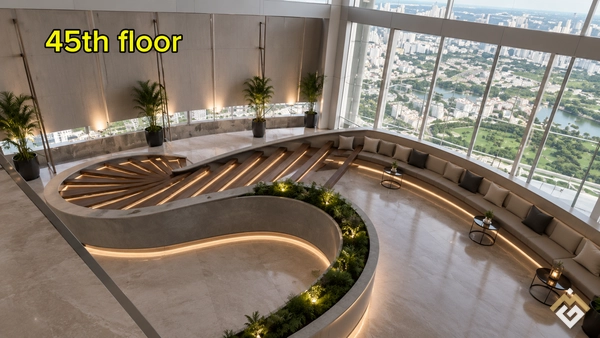 The Sky Walk Residence$15,000,000
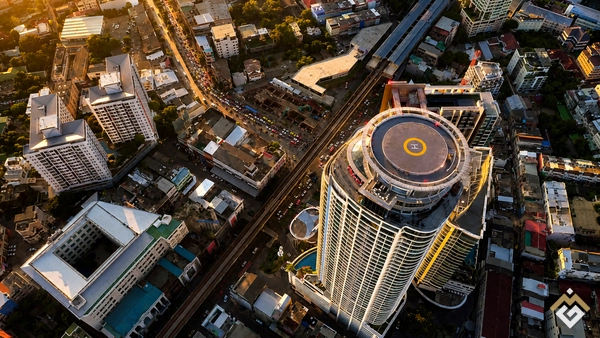 Penthouse at Sky Walk Residence in Bangkok, with access to rooftop helicopter pad$15,000,000
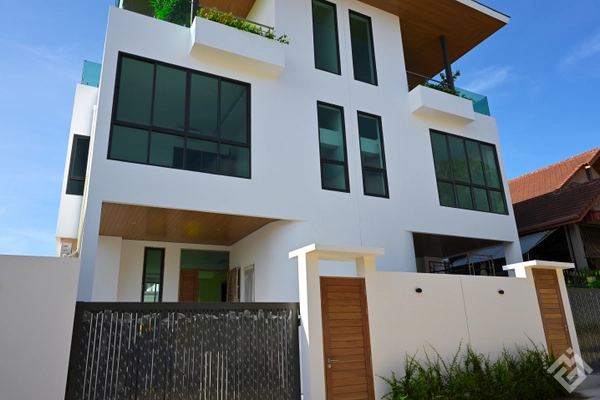 Villa Laelia€570,000