Manche offene Häuser fühlen sich abends ruhiger an als tagsüber
14656 Brandenburg - Brieselang, Germany
1 / 8
Details
Type
Residential
Rooms
4
Area
136.65 m²
Description
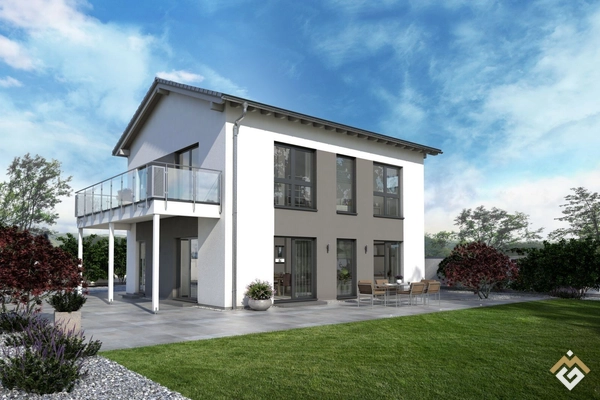
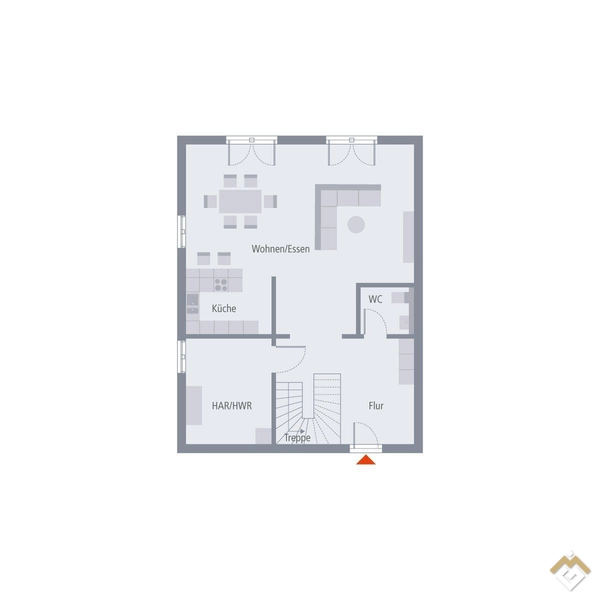
The side facing the terrace initially appears quite open. At some point, it changes more or less incidentally, how much is still happening outside below. Eventually, it actually changes down here rather incidentally, how much is still going on outside. During the day, the open side to the terrace seems directly connected at first. Light pours through the living area. Doors open. One steps outside briefly, back in, or stands somewhere between the kitchen and dining table for a moment. This happens just like that. With around 136 m², the house remains openly organized, without everything needing to happen simultaneously below. It is precisely there that a quieter atmosphere often develops later, how closeness, light, and everyday life actually distribute. Especially in the evening, the effect below often changes more than in the morning. Then, the open terrace side gradually becomes a quieter outer edge. Not closed off. But also not completely open. And at some point, some things feel more sheltered there, even though nothing has actually changed. The hallway distributes the paths below relatively calmly. Kitchen, dining, and living areas remain connected, without movement getting stuck in the same spots permanently. After a while, one often notices rather incidentally whether openness really remains relaxed — or eventually begins to resonate permanently. Not every open structure automatically remains calm. And sometimes, it doesn't even depend on the area. But rather on how light, sounds, and movement converge at different times of the day. Especially when less is happening outside, the perception below often changes quite quietly. Sometimes the terrace door simply stays open for a moment in the evening, even though it is getting a bit cooler. Such little details often stand out more later than the actual floor plan. Quieter retreat areas develop simultaneously upstairs. Not completely separated. But far enough apart so that everyday life doesn't remain simultaneous permanently. Especially in the morning, one often quickly realizes whether this kind of closeness and distance fits their own rhythm. Some may appreciate this openness. Others may later need a bit more shielding. Both usually develop over time. Therefore, the house does not try to appear as large or particularly quiet as possible. Rather, it is openly organized — with areas that feel different depending on the time of day. And it is precisely there that the actual self-examination usually begins later. Not directly during the first tour. But at some point in the evening, when calm slowly arises below and a bit of activity still continues outside. Contact options are included in the location text. André Christen Classification and orientation in house construction Havelland · Berlin-Spandau # Equipment Design 2 - What is prepared here - and why open houses often appear differently calm later Many wonder at this point what is actually already prepared — and when a house really starts to feel like everyday life later. With around 136 m², the house remains openly organized, without everything needing to happen simultaneously below. Especially between the entrance, living area, kitchen, and terrace, it often develops later how calm closeness actually remains there. Not every open structure feels the same permanently. Some only realize after a while when openness relieves — and when outside actually resonates more strongly than expected. At the beginning, one usually doesn't think much about this. A house is often not decided only on the construction site. But much earlier. * Stages of completion - where everyday life slowly becomes tangible The stages of completion do not simply show how "finished" a house is. * But at what point everyday life should begin * how much influence remains important * and how open or calm the path to moving in should feel later The example calculation is based on painter-prepared, as it is usually easiest to assess from there which topics should later be taken over by oneself — or where more everyday life should arise earlier. Technically ready One enters and first notices the foundation. * Technology is running * Rooms are prepared * The structure is already functioning But much remains open. Especially in an openly organized house, a lot often changes later. Floors, surfaces, or light effects sometimes develop step by step with everyday life. This takes time. And sometimes a bit of patience, as decisions run parallel for longer. Some appreciate exactly that. Others eventually realize that they needed more calm earlier. Painter-prepared Here, the impression often changes relatively quickly. One enters and notices: now everyday life is slowly becoming tangible. * Walls are prepared * Surfaces appear clearer * The next step remains manageable One no longer starts completely from scratch. And exactly that reduces for many later the feeling that something remains permanently open. Especially in houses with an open living structure, this often makes more of a difference than one thinks beforehand. Not because more area is created. But because decisions sort themselves earlier. And some things thus appear less simultaneous. * This stage is the basis of this offer. Move-in ready The door opens and many things run directly with. * Rooms function immediately * Furniture in * Everyday life begins earlier Especially when other things are happening in parallel, this relieves many more than expected. Not because everything suddenly becomes perfect. But because less open construction site energy runs along. * Inclusive services - what becomes calmer beforehand A house does not only come into being during the interior construction. Many important foundations already come together beforehand. * Planning, foundation slab, and construction interlock * Building envelope and technology are prepared * Many processes are established before anything is even set up later And exactly this makes many things appear more controllable later. Not completely stress-free. But significantly more tangible. Especially the room height of around 2.80 m often does not consciously stand out to many at first. Later, one often notices the effect of it. * Rooms appear calmer * Light distributes more softly * Simultaneity presses less quickly Especially when several things are happening below in parallel. Some only pay attention to this weeks later. The room climate also runs rather quietly. * Fresh air is automatically regulated * The living feeling remains more balanced * Much does not need to be constantly readjusted One usually does not talk much about this. And exactly for that reason, it often stands out later when it is missing. Also, roller shutters and technical processes interlock directly. * Much works from the beginning * Some things do not need to be added later * Everyday life thus appears more complete earlier Structure often makes more of a difference here than individual equipment. * BLB / Control Many questions become calmer precisely at the point where the construction and service description comes into play. There it is clearly stated, * what is included * how far services are prepared * and at what point one's own influence begins Much appears less abstract as a result. Not through advertising. But because connections suddenly become more tangible. And some things are indeed read more slowly because decisions appear calmer as a result. * Process - from a single source Construction continues step by step. * One section connects to the next * Responsibilities remain together * Processes do not constantly diverge And exactly that often relieves more later than one suspects beforehand. Especially when work, everyday life, or other topics continue in parallel. One quickly notices: * It simply continues. Not perfectly. But understandably. And exactly that often creates more calm later than individual extras. * App / Overview A quick look at the builder app is usually enough. * One sees directly where the house currently stands * what has already happened * and how it continues The house does not disappear somewhere outside of one's everyday life. * It remains tangible * clear * and in one's pocket Especially in longer construction phases, sometimes exactly that is enough for many to feel less open. * Kitchen & Bathroom - where everyday life becomes really tangible later Especially the kitchen and bathroom often show relatively early how everyday life could develop later. Bathroom The bathroom is prepared. * Foundation and use are established * how far everything will be finished depends on the chosen stage of completion This means that not everything has to be decided simultaneously. And exactly that relieves many more than expected later. Kitchen The kitchen remains deliberately open. Not everyone lives there the same way. * Some need short distances * others more distance * some prefer calm, even though much remains open below The room is prepared. How it will be used later often develops with everyday life. And some actually only realize later that they use openness differently than originally thought. * What one often notices about it Not every open structure automatically remains calm. What matters most is usually * how light and everyday life converge * how strongly the outside resonates later * and whether openness remains relaxed permanently — or eventually begins to resonate constantly Exactly there, the actual self-examination often begins later. * Additional services - kept deliberately open Some services remain deliberately flexible. Not because something is missing. But because some decisions only really make sense later. Much actually develops with everyday life. This keeps the path adaptable without having to start anew constantly. And some things simply sort themselves out eventually. * Classification With around 136 m², the house remains openly organized, without having to become permanently restless. * Paths remain connected * initial distance spaces still emerge * everyday life distributes more calmly * openness remains more controllable And exactly there, one often only realizes later whether this mix of closeness, light, and openness really fits their own rhythm. * What often becomes more important later Many initially pay attention to rooms. Later, one often notices more how calm everyday life remains — when openness does not allow everything to happen simultaneously. - Plot area: approx. 1113 m² # Location description Brieselang often runs at a somewhat different pace in everyday life. In the morning, one usually first notices this around the train station, B5, or the typical routes towards Berlin. Some streets come alive relatively early. Cars stop briefly at intersections. Somewhere, a bicycle rolls quickly over the sidewalk. Then it becomes calm again. Not everywhere at the same time. A few streets further, much appears significantly more relaxed again. Especially during the week, much runs more incidentally there. Shopping. Short distances. In and out. People who actually have to leave but still go back into the house because something is missing. This sounds quite banal at first. In everyday life, one often only realizes later whether this pace is more relieving — or eventually runs permanently alongside. In the evening, Brieselang changes again differently. Not completely silent. But noticeably slower in many places. Sometimes one still hears voices somewhere, a front door, or briefly tires on wet streets, and then not much happens for a while. Especially on warmer days, there is often movement outside for longer. One usually does not consciously pay attention to this. At some point, it simply runs along. And exactly for that reason, some only realize later whether they actually like this slight openness. Or whether they need more shielding after all. Both often appear relatively similar at the beginning. The pace towards Falkensee, Nauen, or Berlin simply belongs to it. For some, this mix of everyday life and accessibility fits well. Others eventually realize that they would have sought consciously calmer processes. This rarely shows directly during the first visit. Rather, at some point between normal days. When shoes are left in the hallway, someone runs briefly to the car, or outside, despite the late hour, a slight movement remains perceptible. Much there does not seem particularly staged. And exactly that makes it pleasant for some later. Not perfectly quiet. Not permanently lively. Rather alternating. Sometimes one only realizes after a while whether this rhythm fits their own everyday life — or whether they were actually looking for something entirely different. André Christen Classification and orientation in house construction Havelland · Berlin-Spandau andre.christen@okal.de 0152 21778970 - WhatsApp possible # Miscellaneous Innovative pioneers who laid the foundation for our current success as early as 1928, and experienced employees who work day by day to exceed our high quality goals - that is OKAL! Founded more than 90 years ago, we still strive to drive the latest developments as pioneers in the industry and offer our customers a comprehensive service that combines our years of experience with the modern ideas of tomorrow. Sustainable, innovative, reliable - for us, not just empty words, but a lived philosophy that is reflected in every OKAL premium house. Provider object ID: AC2026_05_19-02/II