

How Much Is My Property Worth in Spain? 2026 Valuation Guide
Official statistics, notarial sale prices, the Catastro reference value and a registered appraisal each tell you something different about what your Spanish home is worth.
Your property in Spain is worth what a buyer will pay for it at the notary, and no single official figure gives you that number in advance. You can get close by combining four things: official price statistics for your area, recent notarial sale prices nearby, a formal tasacion by an appraisal company approved by the Banco de España, and an honest look at condition and energy rating. This guide explains each source, what it shows and where it misleads.
Start with official price trends
The main official measure of price movement is the Housing Price Index published every quarter by the national statistics office, the INE. It tracks the sale price of private dwellings bought by households, both new and second-hand, and adjusts for changes in the mix and quality of homes sold. It is built from administrative records that cover about 95% of housing sales in the quarter. In the second quarter of 2026 the index rose 12.2% year on year and 3.4% on the previous quarter. Second-hand homes rose 12.9% and new homes 7.4%. Every region recorded an annual increase, from 9.5% in Navarra to 15.2% in the autonomous city of Ceuta. Use these figures to judge direction and speed, not to price your home. The index is a percentage change, not a price per square metre, and a regional average says little about one street or one building. It tells you whether a valuation from a year ago is now out of date.
Property for sale in Spain
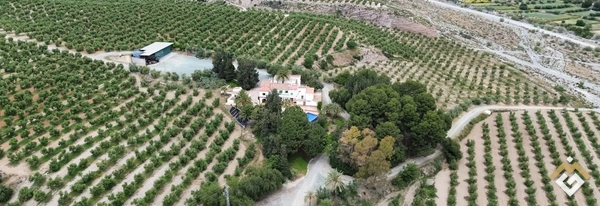 Certified Organic Olive Estate$2,850,000
 Exquisite Villa in Alcaidesa€4,500,000
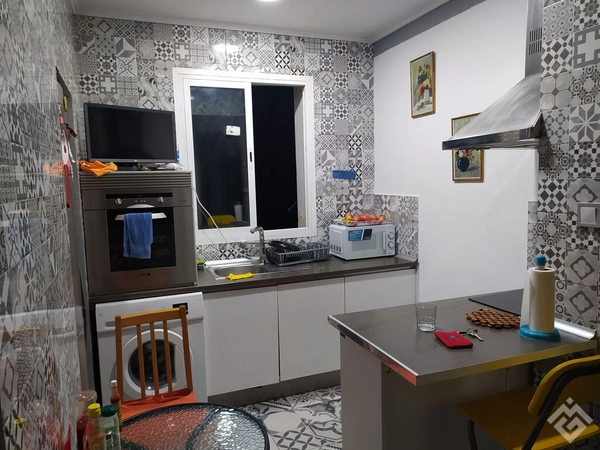 Apartment for sale in Francesc Tarrega, 3€174,250
Check appraised and registered prices
Three further sources give price levels in euros per square metre. The Ministry of Housing and Urban Agenda publishes a quarterly appraised value statistic, with provincial detail and a split between homes up to five years old and older ones. It put free-market housing at 2,355 euros per square metre in the second quarter of 2026, up 12.5% in a year, with Madrid at 4,089.6 euros and the Balearic Islands at 3,980.8 euros. These are appraisers' estimates, not signed prices. The property registrars' quarterly statistics reported an average registered price of 2,487 euros per square metre in the same quarter, with used homes at 2,448 euros and new homes at 2,636 euros. The notaries' statistical service reported 2,112 euros per square metre for sales signed in July 2026, up 7.7% in a year. The three figures differ because each body measures a different set of homes at a different moment, so compare like with like.
Look up notarial prices nearby
National averages only take you so far. The notaries' statistics portal, launched in October 2025, is free to use and is based on anonymised sale deeds signed before notaries, so it reflects actual transaction prices and not advertised ones. Its interactive map lets you select an area and filter by type of property and construction, then shows the average price per square metre, average floor area, average total amount and number of sales. It is updated monthly and covers the most recent twelve months of activity. Start with your municipality, then narrow the area as far as the number of sales allows. An average built on a handful of sales can swing sharply, so check how many transactions sit behind the figure. Then adjust for what the average cannot see in your home: floor level, lift, terrace, parking, orientation, state of repair and the condition of the building. That adjusted figure is your first realistic working range.
Check it with AI — free
Tools that work right away, without signing up.
Understand the Catastro reference value
Every owner should look up the valor de referencia, the reference value set by the Directorate General for the Cadastre. It is determined each year, in all municipalities at once, from the prices of sales signed before notaries or entered in the Land Registry, and is adjusted for the category, age and state of conservation recorded for your property. It is public and can be consulted on the Cadastre's electronic office. It matters for tax. It is the minimum taxable base for transfer tax and stamp duty and for inheritance and gift tax, and if the declared price is higher, the higher figure applies. Your buyer will therefore check it before making an offer. It is not market value. By law it must not exceed market value, and a reduction factor is applied to keep it below. It also relies on the Cadastre's description of your home, which may be out of date. The separate cadastral value, used for the annual property tax, is a different figure again.
Know how a tasacion works
A tasacion is a formal valuation report issued by an appraisal company approved by the Banco de España, which enters such companies in a special register and supervises them. Approval is mandatory for valuations that secure loans backing mortgage securities, so your buyer's bank will rely on one. The valuation rules require a physical inspection of the property by a competent technician. They name four methods: cost, comparison, capitalisation of income and residual. For a home, the comparison method needs data on at least six comparable transactions or offers. The report is signed by a representative of the company and by the professional who prepared it, and it expires six months after issue. A lender must accept a valuation supplied by the client if an approved appraiser certified it and it has not expired. No law obliges you to commission one before selling, but it gives you an independent figure and shows what a buyer's lender is likely to see.
Weigh an agent's price opinion
An estate agent's valuation is an opinion of the likely selling price. It is not a tasacion and a bank will not lend against it. Its strength is local knowledge: a good agent knows what recently sold in your building, how long it took and what buyers objected to. Its weakness is that the figure is not produced under the official valuation rules and is not supervised by the Banco de España. Some agents also quote a high price to win the instruction. Ask each agent to show the comparable sales behind the number, with dates and floor areas, and to separate signed prices from asking prices. Ask two or three agents and compare their reasoning as well as their figures. Then set the opinions against the notarial data for your area and, if you have one, the tasacion. Where the figures sit far apart, ask why before you choose a listing price. A price you can justify with evidence is easier to defend in negotiation.
Account for energy and negotiation
Two further points move the final figure. First, an energy performance certificate is mandatory when you sell. The owner is responsible for obtaining it, the label must appear in any advertising for the sale, and the certificate is valid for a maximum of ten years, or five years if the rating is G. The rating also affects value. A Banco de España study published in 2025, using sales from 2015 to 2022, found that higher energy efficiency raises the average price of a home by up to 9.7% compared with the least efficient homes. Second, advertised prices are not sale prices. A property portal's negotiation index for provincial capitals in the first half of 2026 found gaps between asking prices and what buyers were prepared to pay ranging from 1% in San Sebastian to 16% in Palma. Portal listings therefore often overstate the market. Base your price on signed prices, and treat asking prices only as a view of your competition.
FAQ
How can I find out what my house in Spain is worth for free?
Check the notaries' statistics portal for average signed prices per square metre in your area, then compare with the quarterly figures from the INE, the housing ministry and the property registrars. Adjust for condition, floor, extras and energy rating. A free online estimate or an agent's opinion can add a further reference point.
Is the Catastro reference value the same as market value?
No. The reference value is set each year by the Directorate General for the Cadastre from notarial sale prices and serves as the minimum taxable base for transfer tax and for inheritance and gift tax. By law it must not exceed market value, so a reduction factor is applied to it.
Do I need an official tasacion to sell my property in Spain?
No law requires a seller to commission one. A tasacion by an appraisal company approved by the Banco de España is mandatory for valuations that secure loans backing mortgage securities, so it is usually arranged for the buyer's loan. Commissioning your own gives you an independent figure before you set a price.
How long is a property valuation valid in Spain?
A tasacion issued under the official valuation rules expires six months after its date of issue. Within that period a lender must accept a valuation supplied by the client, provided an approved appraiser certified it. After six months you need a new report, because prices and the property itself may have changed.
Does the energy certificate affect my home's value in Spain?
Yes. The certificate is mandatory when you sell and its label must appear in advertising. A Banco de España study published in 2025 found that higher energy efficiency raises the average price of a home by up to 9.7% compared with the least efficient homes, based on sales from 2015 to 2022.
Find out what your property is worth
Get a free AI valuation in about a minute, then list your property once and reach buyers and brokers across the GREM network.
Get a free valuationOwn a property? For owners ↗
Property for sale in Spain
Live listings from the GREM catalogue — prices and areas as of today.
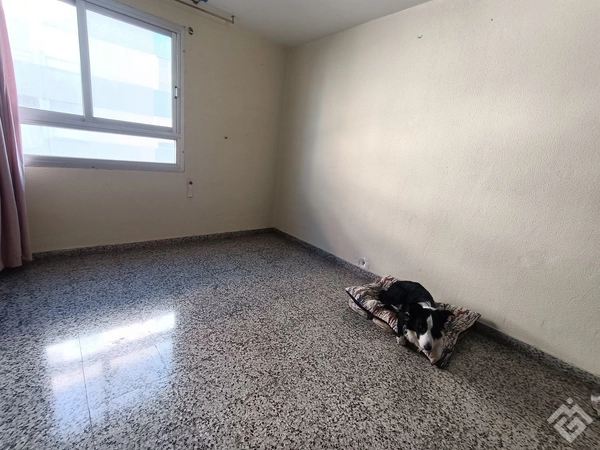 Apartment for sale on Avenida Sants de la Pedra, 3€123,000
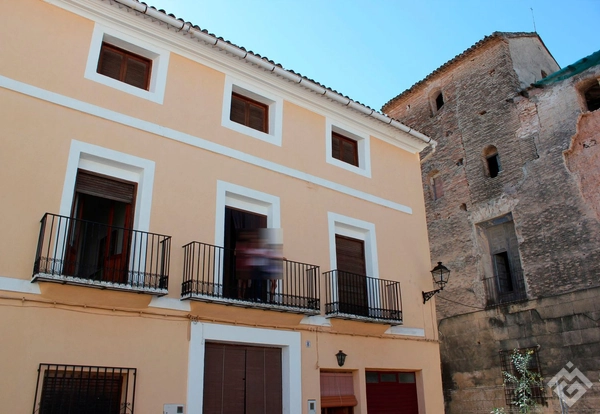 Duplex for sale in Plaza Major, 8€82,000
 Apartment for sale on San Joaquín Street, 14€112,750